Color Analysis Quiz
Find your color season in two minutes, free. Use a selfie for the most accurate read of your real skin tone, or answer six quick questions. You get your season, a personal color palette and the exact colors to shop.
“What season am I?”
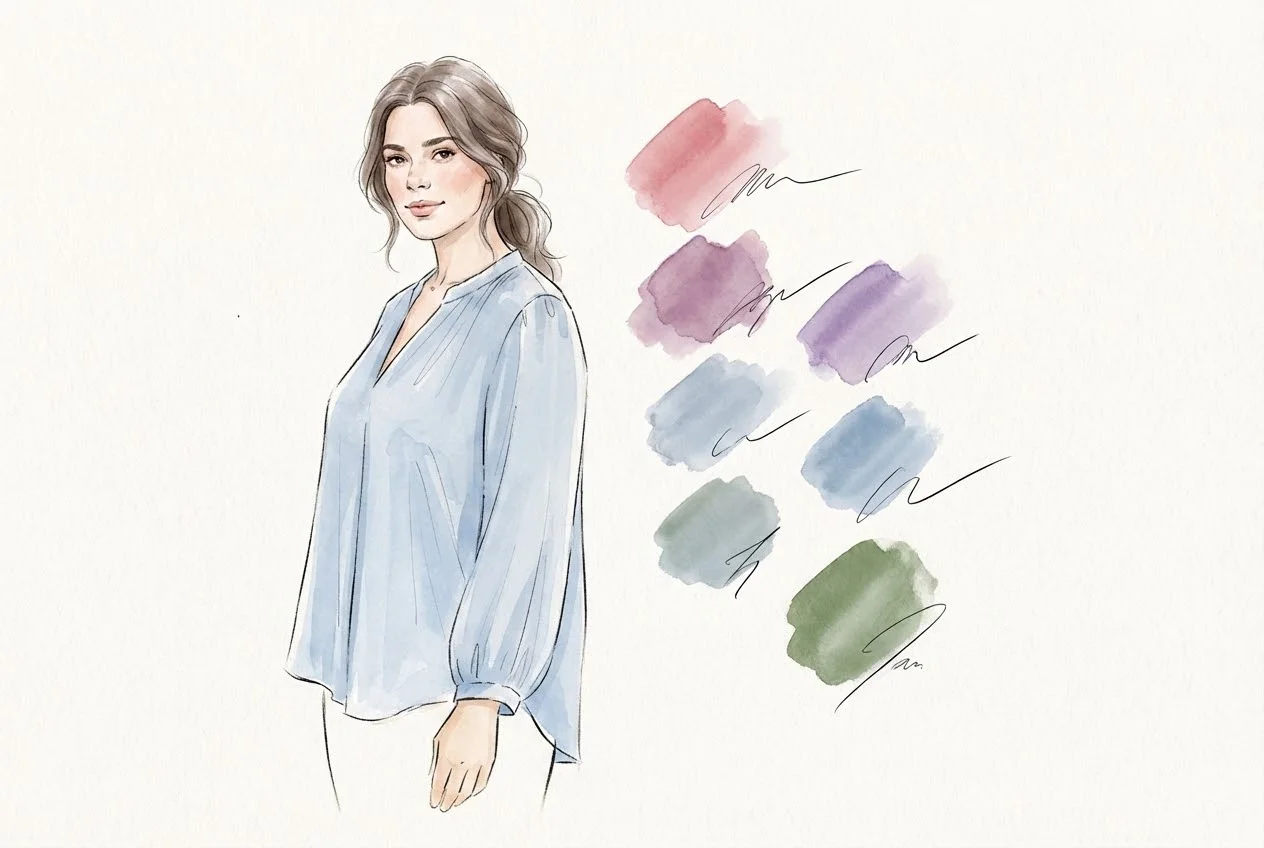
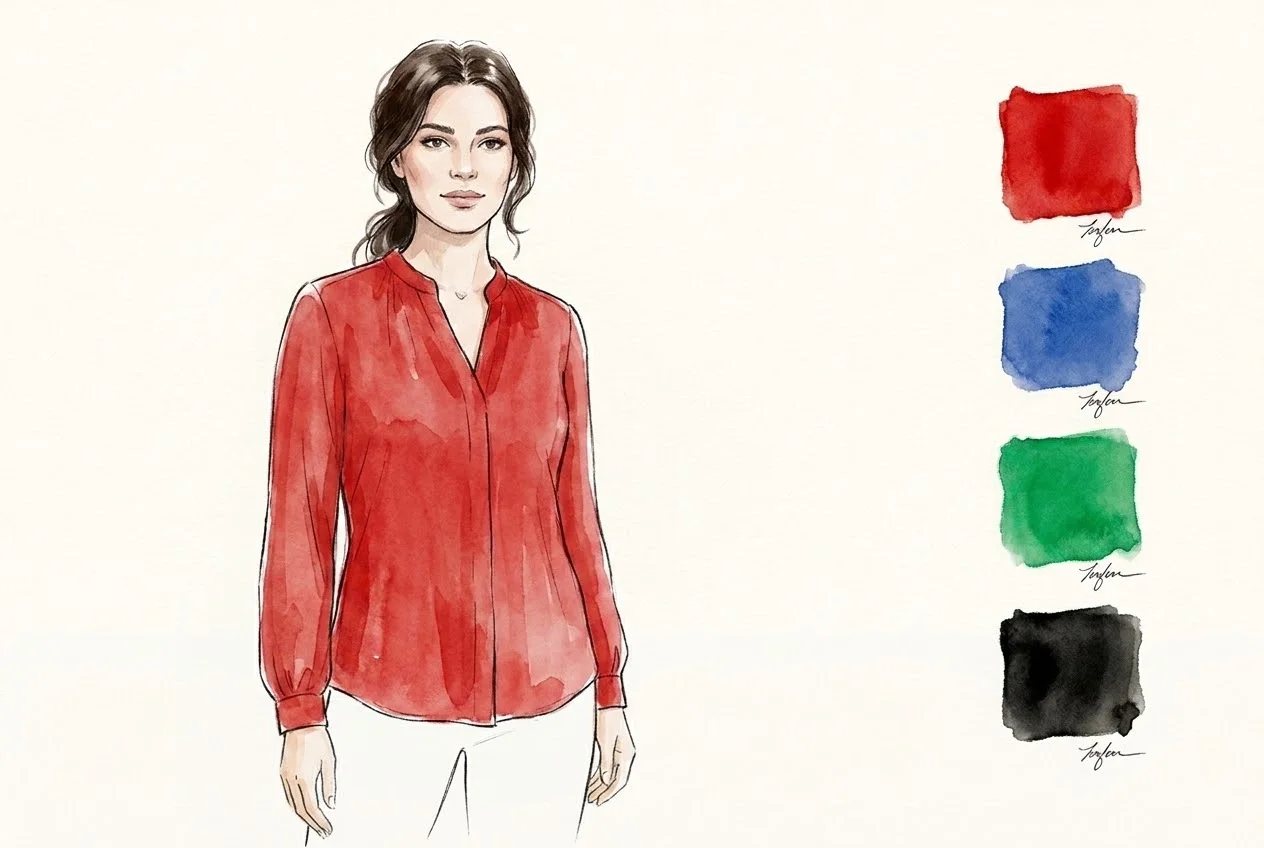
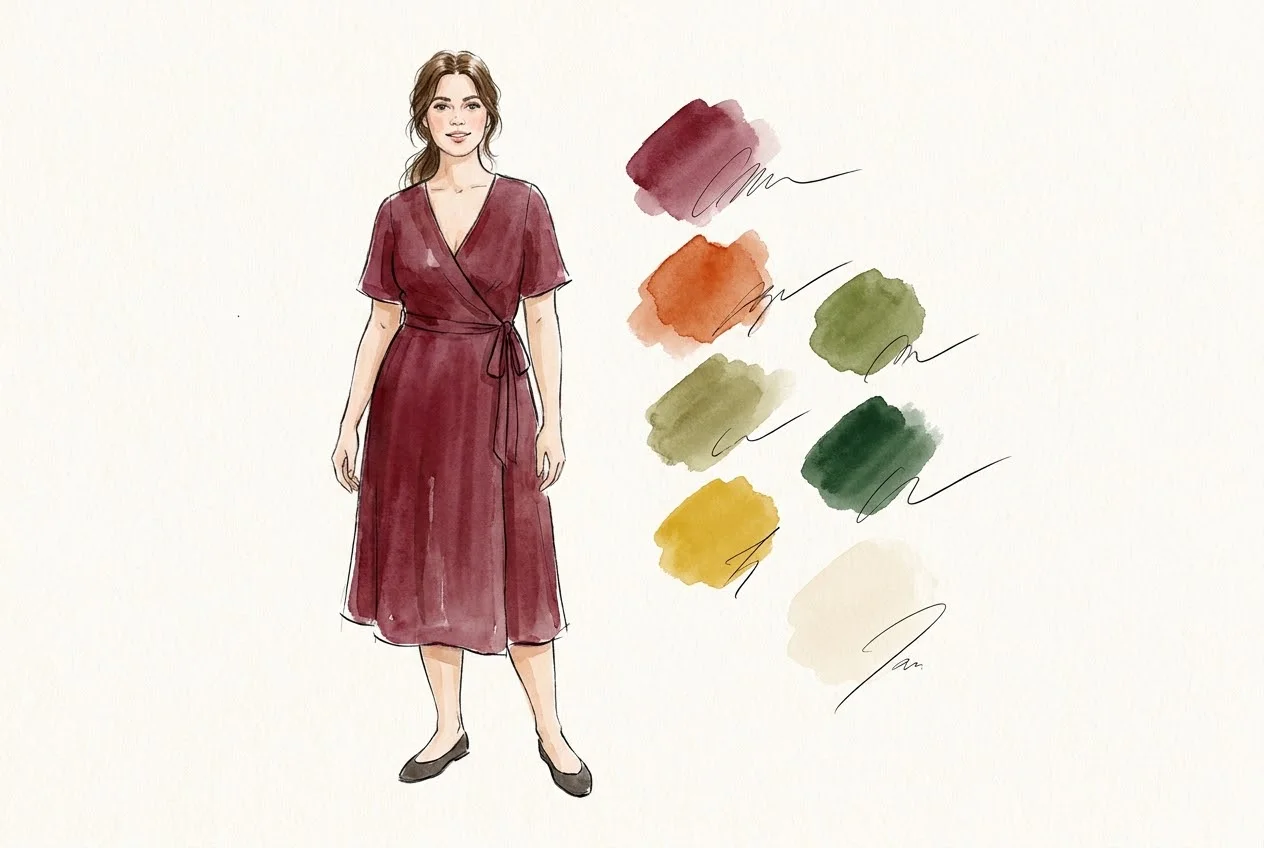
What your result looks like
Three examples, each detected right in your browser. Your season, your palette and one rule to remember.

Good to know
The essentials on the method, the self-check and the most common questions.
How color analysis actually works+
Color analysis sorts your natural coloring into a season so you know which colors make your skin look clear and rested instead of tired or washed out. It rests on three things a professional reads in your skin, hair and eyes, the same three measures the painter Albert Munsell defined back in 1905.
The first is hue, your undertone, warm (golden, peachy) or cool (rosy, bluish). The second is value, how light or deep your overall coloring is. The third is chroma, whether your coloring is bright and clear or soft and muted. Carole Jackson made the four seasons famous in 1980 with Color Me Beautiful. Around 2000 Kathryn Kalisz built her Sci\ART system on Munsell's three axes and split the four seasons into twelve, which is why most modern tools talk about Light Spring or Soft Summer rather than just Spring or Summer.
How to find your season at home+
You can get a reliable first read on yourself in good daylight, with no makeup and your hair pushed back. Stand near a window, not in yellow lamplight, which fakes a warm result.
- Undertone: hold a piece of gold fabric and then silver near your face. Gold that makes you glow points to a warm season (Spring or Autumn), silver that looks cleaner points to a cool one (Summer or Winter).
- Depth: look at the contrast between your hair, skin and eyes. Dark hair with light skin is high contrast and leans Winter, soft blended coloring leans Summer or Spring.
- Clarity: bright, clear eyes with a sharp limbal ring read as clear seasons (Bright Winter, Bright Spring), gentle hazy eyes read as soft ones (Soft Summer, Soft Autumn).
- Brightness test: hold a clear, saturated color and then a dusty, grayed version next to your face. Whichever makes your skin look even, your season matches it.
The four seasons at a glance+
| Season | Undertone and depth | Colors that suit |
|---|---|---|
| Spring | Warm, light, clear | Coral, warm peach, golden yellow, fresh green |
| Summer | Cool, light, soft | Soft rose, dusty blue, lavender, mauve |
| Autumn | Warm, deep, muted | Rust, olive, mustard, terracotta, teal |
| Winter | Cool, deep, clear | True red, emerald, royal blue, pure white, black |
Most women sit between two seasons, which is exactly why the twelve season model adds a bridge type to each one. If you are torn between Summer and Autumn, you are probably a Soft Summer or Soft Autumn, both quiet and muted, just on different sides of warm and cool.
Common mistakes that throw off your result+
Most wrong results come from the photo, not from you.
- Judging in warm indoor light, which pushes everyone toward Autumn.
- Wearing makeup, a recent tan or a fresh hair color, all of which hide your real coloring.
- Confusing your favorite color with your best color. Loving black does not make you a Winter.
- Forcing yourself into one of the four classic seasons when you are clearly a soft or bridge type.
- Mistaking high contrast for warmth. Contrast is about depth, not undertone.
Where the method comes from+
The thread runs from Munsell's hue, value and chroma in 1905, through Suzanne Caygill and Carole Jackson who turned it into the four seasons, to Kathryn Kalisz and her Sci\ART twelve tone system and teachers like Christine Scaman who refined it into the bright, light, soft and deep subtypes most analysts use today. Korean studios pushed it further with tone first reading and sixteen subtypes, sorting people by how much white, black or grey sits in their coloring before they ever ask about warm or cool.
A professional draping session works the same way underneath. The analyst holds fabric beside your bare face in daylight, watching whether your skin looks even and lifted or shadowed and tired, and narrows down warm against cool, then light against deep, then clear against soft. At FitsYou we use the same three axes, read them from your photo, and give you a straight, honest result with the colors that genuinely flatter you, plus the shades to skip.
FAQ
Is this color analysis quiz free?
Yes. The quiz and your color season result, palette and shopping colors are completely free, with no signup.
How accurate is a color analysis quiz?
The selfie option reads your real skin undertone and depth from the photo, which is more accurate than questions alone. The full style guide is currently opening to 100 free beta testers.
What are the four color seasons?
Spring (warm, light), Summer (cool, soft), Autumn (warm, deep) and Winter (cool, deep). Your season tells you which colors make you glow.